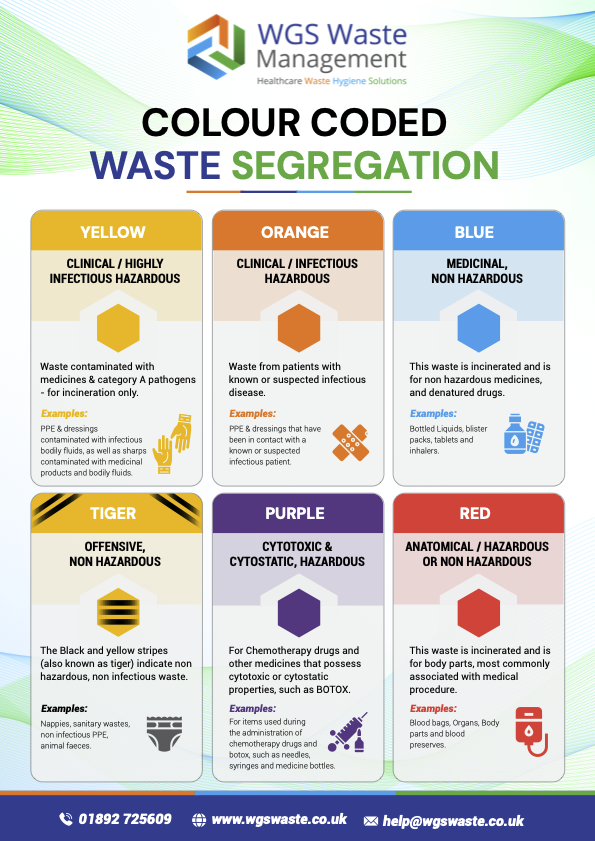
What is Cytotoxic Waste?
Cytotoxic waste is waste contaminated with medicines or substances that are toxic to living cells. These materials are commonly generated within healthcare settings where chemotherapy drugs and other cytotoxic or cytostatic medicines are prepared, administered or disposed of.
Because these medicines can damage healthy cells and pose a risk to both human health and the environment, cytotoxic waste must be segregated, stored and disposed of separately from other healthcare waste streams in accordance with UK hazardous waste regulations.
At WGS Waste Management, we help healthcare providers safely manage cytotoxic waste through fully compliant collection, transportation and disposal services across Kent, Sussex, Surrey, South London and the wider South East.
What is the Difference Between Cytotoxic and Cytostatic Waste?
Although the terms are often used together, they have slightly different meanings:
- Cytotoxic medicines destroy or damage living cells.
- Cytostatic medicines stop or slow down cell growth and cell division.
These medicines are commonly used in:
- Cancer treatments and chemotherapy
- Hormone therapies
- Immunosuppressant treatments
- Certain antiviral medicines
- Certain antibiotics, including chloramphenicol
Both cytotoxic and cytostatic medicines require specialist disposal when they contaminate waste materials or sharps.
Examples of Cytotoxic Waste
Examples of cytotoxic waste include:
- Partially used or expired chemotherapy medicines
- Drug vials and ampoules
- Syringes containing cytotoxic medicines
- IV bags, giving sets and infusion equipment
- Contaminated gloves and PPE
- Protective gowns and aprons
- Dressings and absorbent pads contaminated with cytotoxic substances
- Disposable items used during drug preparation or administration
Any material contaminated with cytotoxic or cytostatic medicines must be segregated and disposed of through the appropriate hazardous waste stream.
Cytotoxic and Cytostatic Sharps Disposal
Sharps contaminated with cytotoxic or cytostatic medicines require special handling and must be disposed of separately from other sharps waste.
Examples include:
- Needles used to administer chemotherapy drugs
- Syringes containing cytotoxic or cytostatic medicines
- Scalpel blades contaminated with cytotoxic medicines
- IV lines and tubing used for chemotherapy treatments
Which Sharps Container Should Be Used?
Sharps contaminated with cytotoxic or cytostatic medicines must be placed into a purple-lidded sharps container for incineration.
Easy Guide to Sharps Colour Coding
🟧 Orange Lid - Sharps not contaminated with medicines
🟨 Yellow Lid - Sharps contaminated with non-cytotoxic medicines
🟪 Purple Lid - Sharps contaminated with cytotoxic or cytostatic medicinesUsing the correct sharps container helps ensure safehandling and compliance with healthcare waste regulations.
Storage of Cytotoxic Waste
Cytotoxic waste should be segregated at the point of production and stored securely in the correct approved containers. Waste producers have a legal responsibility to ensure: