What is Clinical Hazardous Waste?
Hazardous waste is classed as material that can pose a substantial or potential threat to public health or the environment if it is not handled and disposed of correctly. In healthcare and clinical settings, this can include items contaminated with infectious materials, chemicals, pharmaceuticals, or bodily fluids.
Hazardous waste can cause harm through infection, toxicity, or environmental contamination, so it must be carefully segregated, stored in appropriate containers and collected by a licensed waste management provider.
Examples of Hazardous Waste
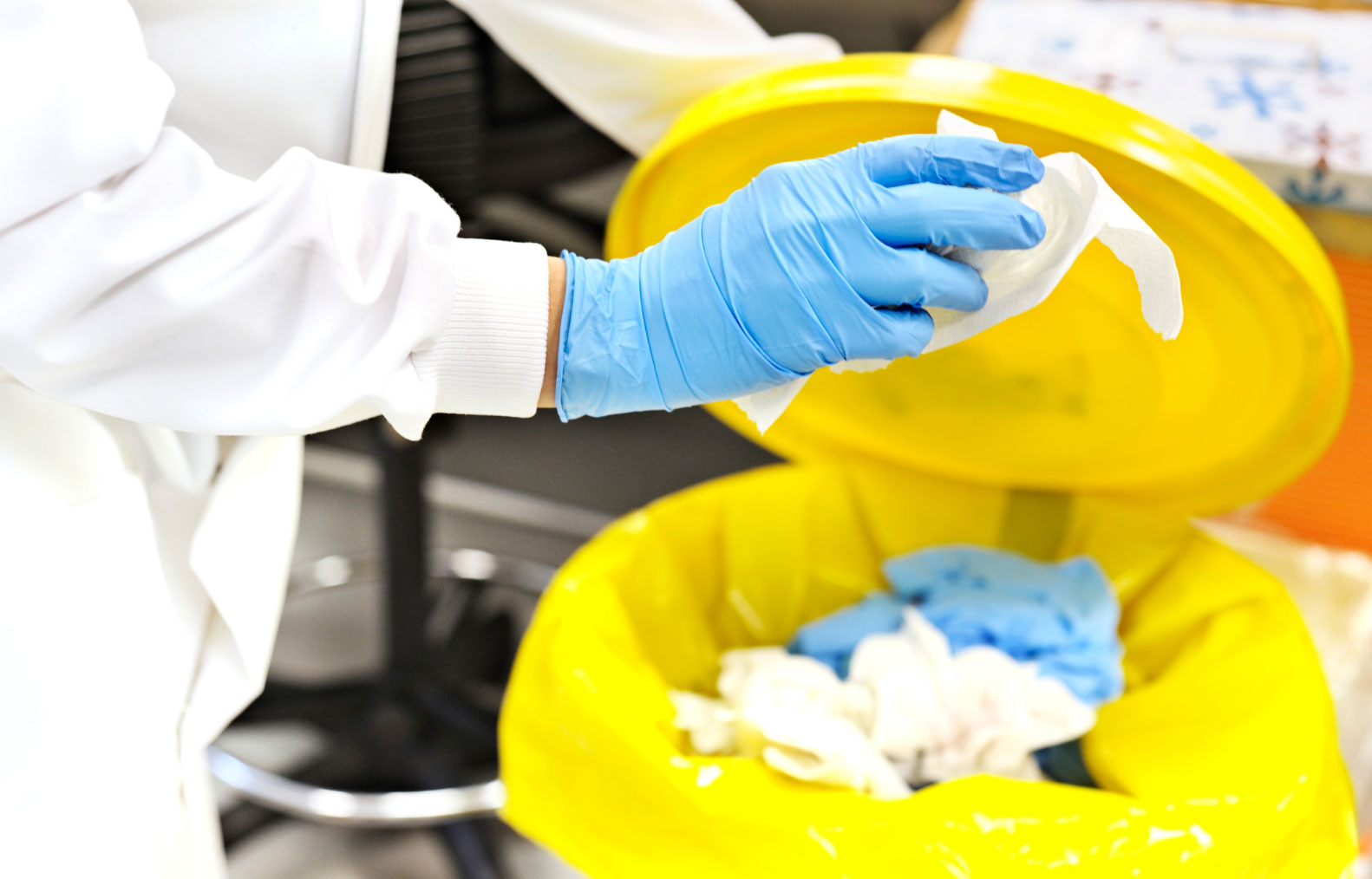
In healthcare and clinical environments, common examples of hazardous waste include contaminated dressings, bandages, swabs and personal protective equipment that have come into contact with blood or bodily fluids.
Laboratory waste, such as specimen containers, cultures and testing materials, may also be classed as hazardous due to the presence of infectious agents.
In addition, certain chemicals, disinfectants and pharmaceutical waste, along with sharps like needles or scalpels that have been exposed to medicines or infectious materials, must be treated as hazardous waste.
Storage of Hazardous Waste
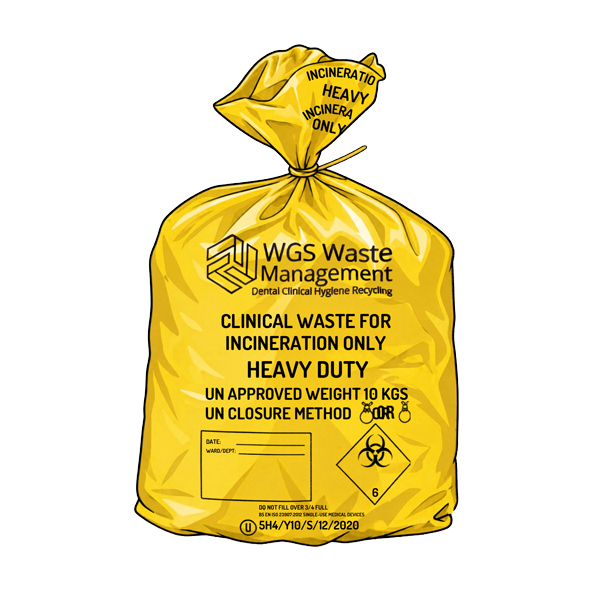
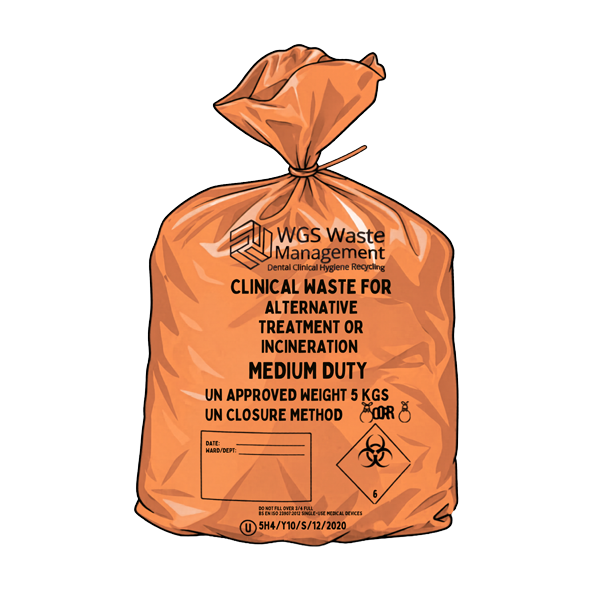
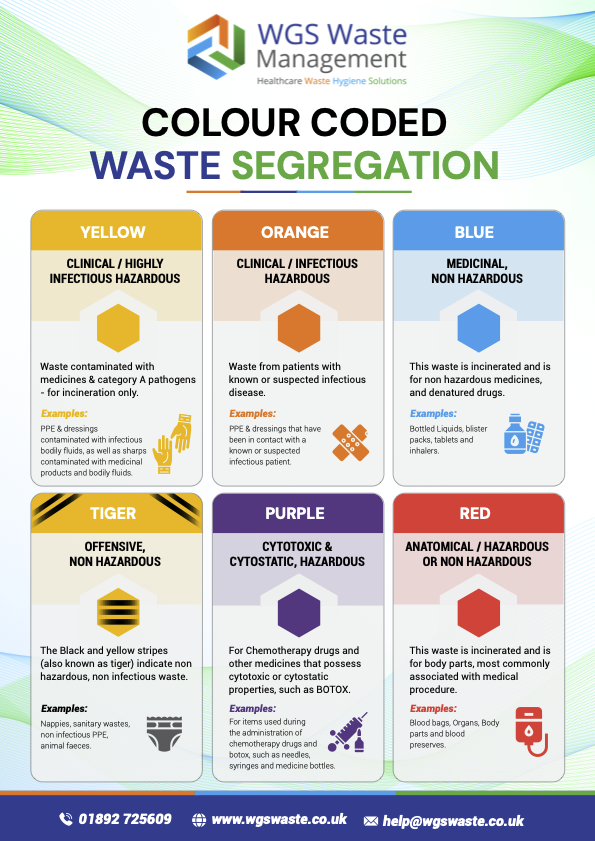
Hazardous waste must be stored safely and securely to minimise risk to staff, patients and the environment. It is the responsibility of the producer of the waste to ensure it is clearly identified with bag ties and safely contained in the correct colour coded waste stream, in bags for soft waste or UN approved containers for hard waste or liquids.